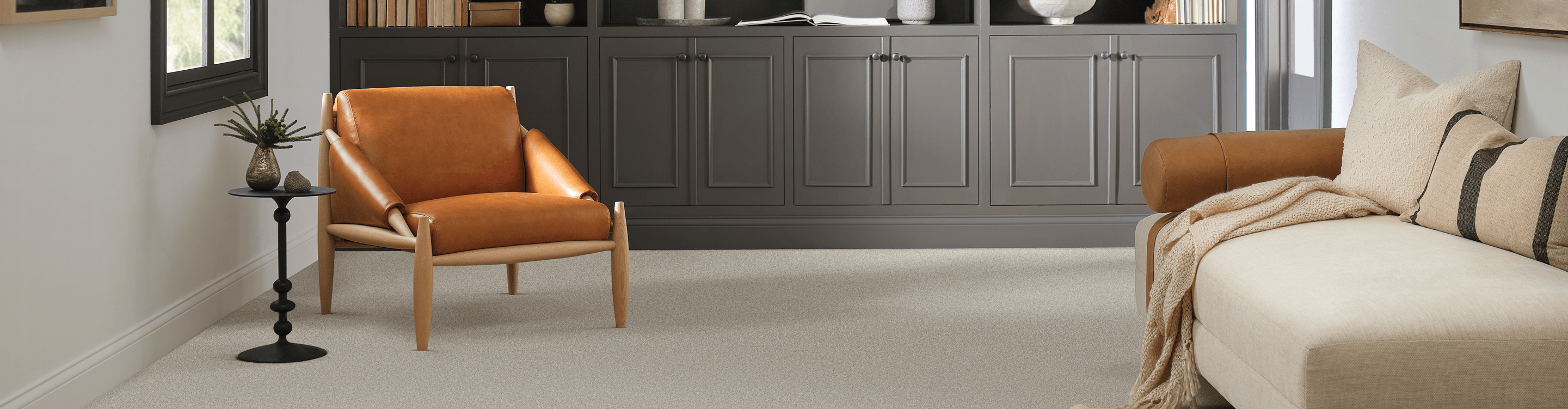
Replacing carpet involves more than picking a color. The right choice depends on your home’s needs, how you use the space, and what kind of care you’re prepared to put in. Here are the key things to know before you get started.
Welcome to our comprehensive carpet replacement guide. We are here to help you transform your space effortlessly with high-quality carpet that fits your family's lifestyle and budget. From expert design insights to seamless installation, this guide covers everything you need to know to make the best flooring decision for your home.
Replacing your carpet is a great investment in your home's comfort and style. While a well-maintained floor can last 5 to 15 years, high-traffic areas often need attention sooner.
Factors that affect carpet longevity include:
Signs it is time for a carpet replacement:
Selecting the perfect carpet involves balancing durability, design, and budget. Our flooring experts can help you weigh the pros and cons of these popular carpet types:
A successful carpet replacement relies heavily on proper installation. While a DIY approach might seem tempting, the process requires specific tools: carpet padding, a carpet knife for precise edges, a carpet roller, and a knee kicker to stretch the material tightly.
Improper DIY fitting often leads to wrinkles, uneven seams, and voided warranties. We highly recommend using professional installation services. Our expert installers guarantee a seamless fit, protect your warranty, and save you valuable time.
To ensure a smooth installation day, you can prep your space by:
Your overall carpet replacement budget depends on a few key factors. Carpet material plays the biggest role. Synthetic fibers like nylon and polyester offer budget-friendly solutions, while specialty fibers and wool cost more. Additional cost factors include the size of the room, the complexity of the installation, subfloor preparation, and the quality of your new padding.
Why choose carpet over hard surfaces? Compared to hardwood or laminate, carpet offers unmatched softness and warmth. It provides natural sound insulation, reducing noise levels in busy homes. It also provides a safe, non-slip surface for children and pets, all while remaining a highly cost-effective and stylish flooring choice.
If you manage a rental property, replacing carpet requires balancing cost with long-term durability. Choose neutral colors and resilient materials, such as Berber carpet, to appeal to tenants and maximize the floor's lifespan. Schedule your carpet replacement between tenancies to ensure a smooth, hassle-free transition.
Protect your new investment with proactive, ongoing care:
Choosing the right carpet is about more than just updating your floors; it’s about crafting a space that feels uniquely yours. As your local flooring experts, we understand that this is both a practical and personal journey. Our experts are ready to guide you with personalized design advice, ensuring the final choice reflects your style and elevates your home.
If you're ready to take the next step but still have questions, we're here to help. Explore our frequently asked questions below for more detailed information, or contact us directly to begin your home’s beautiful transformation.
Here, you'll find answers to your questions about carpet replacement, from choosing the right material and understanding the installation process to comparing carpet with other flooring options.
The cost of replacing your carpet can vary quite a bit, as several factors come into play. The final price will depend on the size of your room, the quality of the carpet you choose (from basic to premium), whether the removal of your old carpet is part of the service, and whether your subfloor needs any preparation before the new carpet is installed.
The size of the room, the complexity of the installation (like on stairs), and the selection of a higher-end carpet will influence the overall investment. For a more tailored idea of the cost, schedule a free at-home estimate with one of our specialists.
While you can find great deals on carpet installation throughout the year, many homeowners find that spring and fall are ideal seasons for home improvement projects. We run promotions at various times, so it’s always a good idea to check for current offers.
Regardless of the season, planning is key. We recommend booking your installation 2–3 weeks in advance, especially during busier periods. This ensures you have the widest selection of carpets to choose from and can schedule a time that works best for you without any rush.
Most carpet lasts 8–15 years under normal residential use, but lifespan varies significantly depending on fiber type, foot traffic, and maintenance.
Nylon and triexta fibers tend to hold up the longest in high-traffic areas, while polyester and olefin are more affordable but wear faster under heavy use. Even a well-maintained carpet can reach the end of its useful life when padding breaks down or fibers no longer spring back underfoot.
If your carpet is approaching the 10-year mark, use the replacement signals earlier on this page as a guide.
In some cases, yes, but it depends on what’s underneath. Carpet can be installed directly over hardwood or tile if the subfloor is level, structurally sound, and completely dry. These surfaces provide a stable base that doesn’t trap moisture or create uneven spots.
Installing carpet over existing vinyl or another layer of carpet is generally not recommended. Old carpet compresses unevenly underfoot, reduces the life of your new installation, and can trap odors and allergens beneath the surface.
Subfloor condition is one of the most important factors in a successful carpet installation, and one of the hardest to assess without pulling up the existing floor. A professional carpet installation consultation is the best way to determine exactly what your floor can support.
It can be. Over two decades, carpet accumulates allergens, dust mites, pet dander, and in poorly ventilated spaces, microbial growth that can resist standard cleaning. Older carpet may also off-gas VOCs (volatile organic compounds) from adhesives and backing materials as those materials break down.
That said, age alone isn’t the deciding factor. A 20-year-old carpet in a low-traffic guest room with regular cleaning may still be serviceable. A 10-year-old carpet in a home with pets, heavy foot traffic, or moisture issues may already be a health concern.
If you’re experiencing increased allergy symptoms, persistent musty odors, or visible staining that won’t come out, start with a professional cleaning assessment. If symptoms persist after cleaning, or if the carpet is visibly degraded, matted, or the backing is crumbling, replacement is the right call.
To choose the right carpet for your space, consider factors such as the room's traffic level, desired comfort, and aesthetic appeal. Evaluate different carpet types like plush for luxury, Berber for durability, and frieze for high-traffic areas. Consulting with our experts can help you match your needs and style preferences with the perfect carpet choice.
While you can install new carpeting yourself, hiring a professional installation team is highly recommended. Professional installers have the expertise to ensure a perfect fit, prevent common issues like wrinkles and seams, and maintain your carpet's warranty. By trusting our experienced team, you’ll save time, avoid costly mistakes, and enjoy a beautifully finished floor that enhances your home’s comfort and appearance.
Carpet installation cost is influenced by several key factors, including the type and quality of the carpet, the size of the area to be covered, and the complexity of the installation. Additional costs can arise from removing old carpet, preparing the subfloor, and choosing carpet padding.
Thank you for contacting Carpet One Floor & Home. Your local flooring expert will reach out to you regarding your inquiry.